
You've signed off on a new hire, watched them take their first call, and held your breath. Three weeks of training are done, but none of that tells you whether they can handle an upset customer while finding the account, logging the disposition, and juggling three screens. You're approving a calendar, not a capability.
Readiness isn't a timeline or a gut feel. It's a standard: a set of things a new agent proves by working real calls from start to finish and clearing a defined bar, before a single live customer is on the line. That proof comes from a simulation, and the simulation has to include the screens, not just the script.
What is a call center simulation test?
A call center simulation test is a full call flow that an agent completes with no guidance, inside a replica of the systems they'll use on the job. They don't know what type of caller is coming. They have to handle the conversation and make the right clicks in the right order on their own. The run is scored against the same quality bar as a live call. Guided practice is the training-wheels version that builds the skill. The unguided run is how a team certifies that an agent is ready to graduate to the phones.
Readiness is a standard, not a timeline
"They've completed training" answers a scheduling question, not a readiness one. Two agents can sit through the same three weeks and arrive at the floor in completely different shape. Time in a seat measures exposure, not proof.
The reason most teams fall back on time is that the alternative has been hard to produce. Readiness today is judged by a manager watching a few calls, a checklist, and a feel for whether someone "seems ready." That judgment is manual, subjective, and inconsistent from one supervisor to the next, which is exactly why the people making the call don't fully believe it. A standard fixes that by replacing the opinion with evidence: the same interaction, the same scorecard, the same bar, for every new hire.
The four things a new agent should have to prove
A readiness standard is only useful if it names what "ready" means. Here's what belongs in it:
- Run the conversation under pressure. Tone, empathy, de-escalation, and control of the call when the customer is upset or the situation is ambiguous. Not a scripted happy path, the messy version.
- Operate the systems while they talk. The part most training skips. An agent who sounds perfect but freezes on the account lookup, the disposition, or the three tools they have to reconcile mid-call is not ready. Talking and navigating at the same time is the actual job.
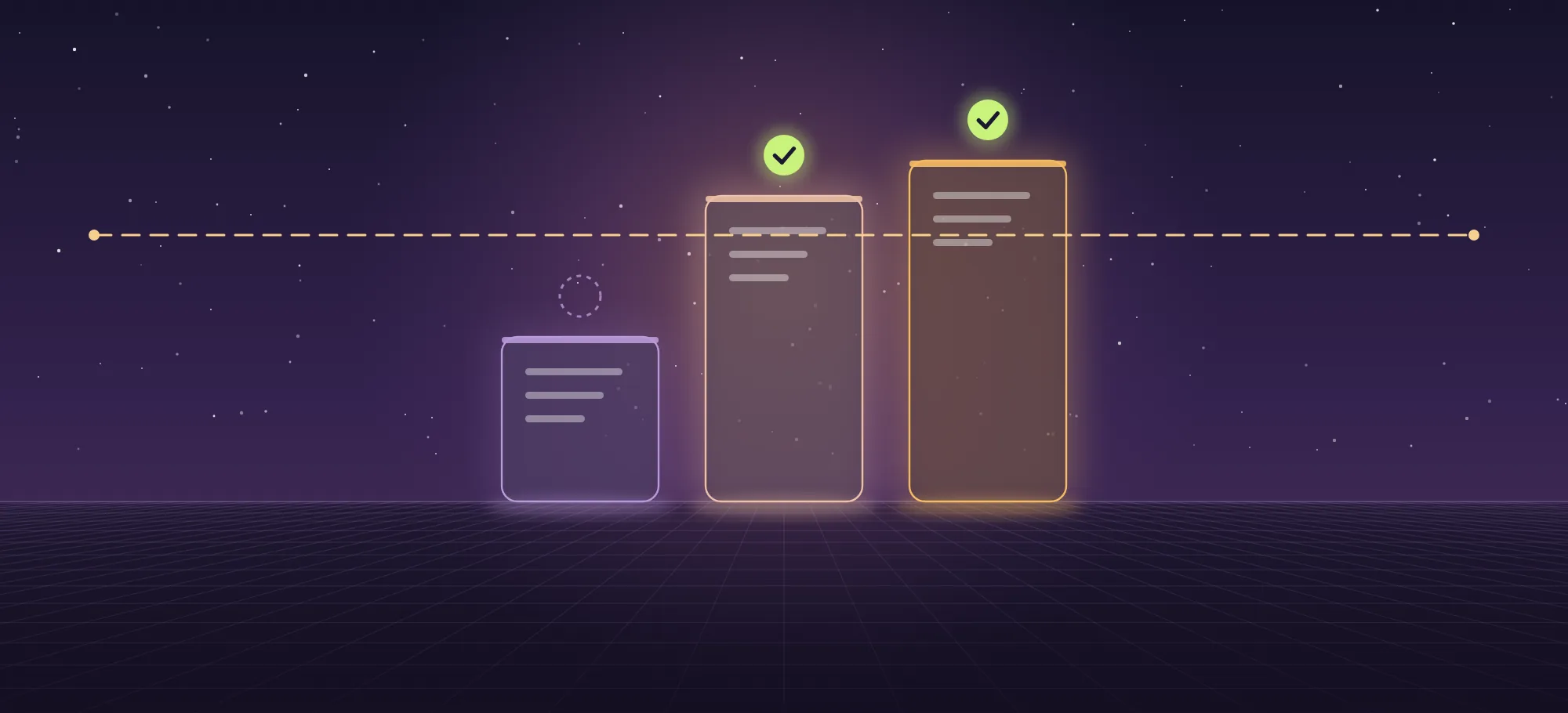
- Hit a defined bar, repeatably. A score, a pass threshold, and more than one attempt so the result reflects a capability and not a lucky run. "Passed once" is not a standard; "cleared the bar twice" is.
- Handle a call they haven't seen before. Live calls don't follow the practice script. A ready agent can take a caller they didn't know was coming and work it from greeting to wrap-up, without needing someone to walk them through it.
Why the conversation alone doesn't prove readiness
Roleplay and mock-call tools drill one of those four: the conversation. That's genuinely useful, and it's also half the job. On a real call the agent is navigating systems while they talk. The moment that trips new agents is almost never "what do I say." It's "where do I click while I'm saying it." A test that only covers the conversation can't tell you whether an agent is ready for the job. It has to include the screens.
How to set the bar
A standard you can defend has a few concrete parts:
- A scorecard, not a feeling. One consistent set of criteria applied to every agent, so a pass means the same thing in January and in July.
- A pass threshold. A clear score an agent has to reach. Set it high enough that you trust it, because the floor is not where you want to discover the gaps.
- Retest logic. A limited number of attempts, with a fail routing to targeted coaching rather than an automatic re-run. The retries are part of the standard, not a loophole around it.
- Test mode separated from practice mode. Practice is unlimited, guided, low-stakes. The test is the scored, unguided proof. Keeping them distinct is what makes the result mean something.
How Reddy fits into the standard
The hard part of a readiness test is recreating the systems. Reddy rebuilds your CRM, ticketing, and workflow tools into a working simulation where clicks have consequences. New hires practice there with guidance on, so a wrong click gets coaching instead of becoming a bad customer experience. When they're ready, the guidance comes off and they run full call flows against callers they haven't seen, scored with Auto QA.
Graduating doesn't mean they're on their own. On their first live calls, Reddy Live Assist surfaces the right answer at the right moment. Because Reddy reviews every conversation, those early calls show where each agent needs more coaching. Practice, prove it, go live with support, and keep improving. For getting agents to the bar faster, see our piece on reducing agent ramp time.
The bar is the simulation
Readiness is not the moment training ends. It's the moment an agent proves, against a real bar, that they can run the conversation and the systems at the same time. Set that standard, make the simulation the place it gets proven, and the first live call stops being the test. Define the bar before the first call, not after the first bad one.